The short answer
Choose vacuum bags when bulky, compressible clothing is the main problem; choose packing cubes when access, sorting, and easy repacking matter more. Vacuum bags remove air and can make jackets, sweaters, and other soft textiles occupy less space, but they do not reduce weight and usually require you to reseal or recompress the load after opening it. Packing cubes keep categories together and preserve quick access, but ordinary cubes do not remove much air. For many trips, the most practical answer is a hybrid: one modest compression bag for bulky layers plus one or two cubes for clothing you will reach during the journey. Decide from the constraint you actually have—bulk, baggage weight, access, wrinkles, or return-trip logistics—then test the finished suitcase at home. A smaller-looking bag can still be overweight, and a packing system that works before departure must also work when you repack.
Vacuum bags and packing cubes solve related but different packing problems. The useful comparison is not which product is “best” in general; it is which system removes friction from the particular trip you are taking.
If you first want to understand what air removal changes, read our guide to how vacuum compression bags save space. This comparison focuses on choosing between formats.
What is the main difference between vacuum bags and packing cubes?
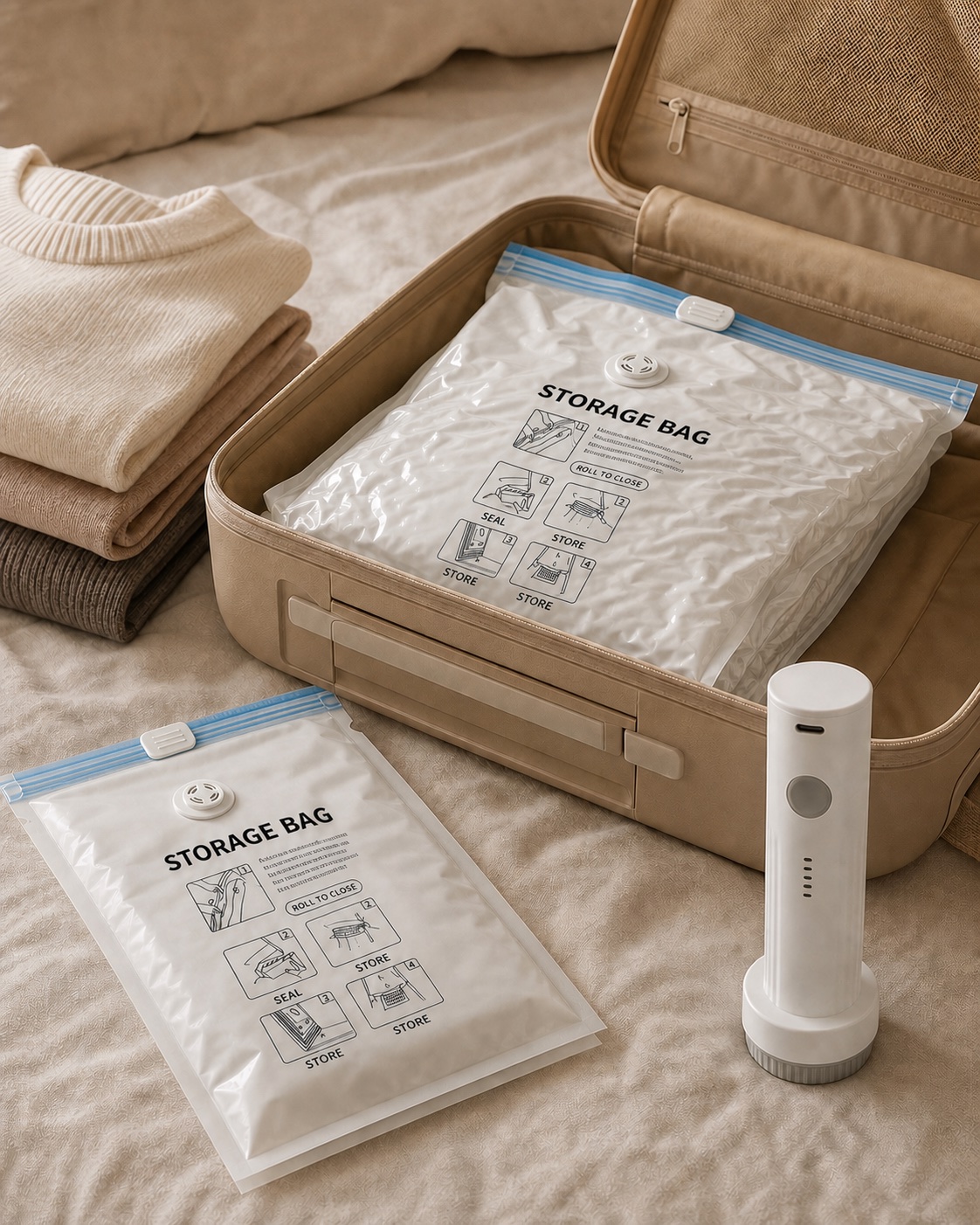
A vacuum compression bag is an airtight flexible bag with a closure and a valve. After soft items are loaded and the bag is sealed, air is removed with a pump or compatible vacuum. The finished bundle becomes denser. The same clothes still weigh essentially the same.
A packing cube is a zippered organizer, usually made from fabric or mesh. It groups items and gives them a consistent shape inside luggage. Some cubes have a second compression zipper, but that mechanical compression is different from removing air through a vacuum valve.
| Question | Vacuum bags | Packing cubes |
|---|---|---|
| Primary job | Reduce the volume of compressible soft goods | Group and arrange items for access |
| Weight | Does not make contents lighter | Does not make contents lighter |
| Access | Opening releases compression and may require a pump | Open one cube without disturbing the rest |
| Best contents | Bulky, clean, dry, resilient textiles | Daily outfits, underwear, accessories, and mixed categories |
| Final shape | Dense and sometimes rigid or uneven | Predictable rectangular organizer |
| Failure point | Seal, valve, puncture, or access to the pump | Zipper, seam, overfilling, or poor category choices |
| Return trip | Requires a realistic recompression plan | Usually easy to close again without equipment |
Which system saves more suitcase space?
For lofty, compressible items, a vacuum bag usually changes volume more than an ordinary packing cube. A thick sweater, puffer layer, or soft bedding contains more removable air than a stack of dense T-shirts. Results depend on the fabric, fold, bag size, seal, and how the bundle fits around the suitcase structure.
That advantage can disappear if the compressed bag forms one hard slab that does not fit around wheels, shoes, or the handle channel. Several smaller groups may use the suitcase more efficiently than one maximally compressed group. Test the packed shape, not only the apparent flatness of the bag.
Which is better for keeping clothes organized?
Packing cubes usually win on access. You can give each cube one role—tops, base layers, sleepwear, or one person’s clothes—and remove only the category you need. Mesh or a label can make the contents identifiable without opening every unit.
Vacuum bags can also separate categories, but every opening creates a repacking task. They work better for a category you will not need until arrival, such as a bulky outer layer or a group of off-season clothes. Avoid burying medication, documents, chargers, or a change of clothing inside a compressed bundle.
What about wrinkles and fabric care?
Neither format guarantees wrinkle-free packing. A cube can hold an orderly fold, but overfilling still presses creases into clothing. A vacuum bag applies more pressure and can set sharp folds when a garment is loaded unevenly.
Use more caution with tailored jackets, structured cups, delicate embellishments, specialty fills, and any garment whose care instructions advise against compression. Pack only clean, fully dry textiles. Do not use either system to hide moisture, odor, or a cleaning problem.
Do vacuum bags or packing cubes help with baggage limits?
Both can help you fit items within a suitcase, but neither changes the airline’s weight allowance. Compression can make overpacking easier because there appears to be more room. Weigh the complete suitcase after packing and check the current rules for the exact carrier, route, fare, and bag type.
Our focused guide to vacuum bags and luggage weight explains what changes on the scale, what does not, and how to check the finished bag before flying.
If the vacuum system includes a powered pump, identify the battery from the device label or manual. Battery rules depend on the device and itinerary. The U.S. Federal Aviation Administration provides PackSafe guidance, while security and airline acceptance rules still need to be checked for the trip.
When is a hybrid packing system better?
A hybrid system separates “compress once” items from “open often” items:
- Put one bulky, resilient category in a moderate-size vacuum bag.
- Use one cube for clothing needed during the journey or first night.
- Use another small cube or pouch for accessories and charging cables.
- Keep documents, medication, valuables, and fragile items outside compression bags.
- Leave enough uncommitted space for purchases, laundry, or a less-perfect return pack.
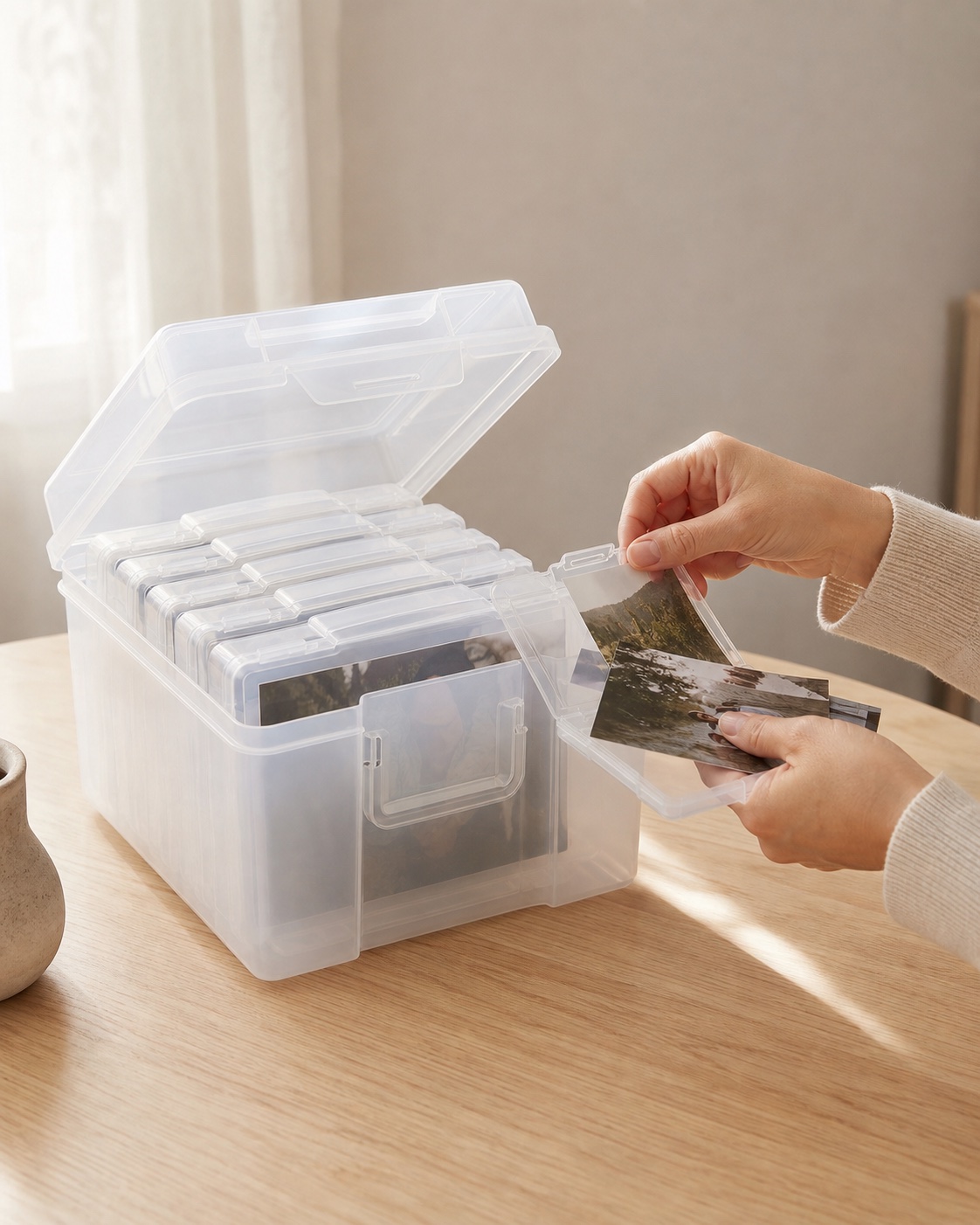
This mirrors a broader organization rule: fewer, clearly named categories are easier to maintain than a large number of tiny ones. The same principle appears in our simple sorting and labeling system for printed photos.
How should you choose for a specific trip?
| Trip situation | Likely starting point | Reason |
|---|---|---|
| Weekend with frequent hotel changes | Packing cubes | Fast access and fewer full repacks |
| Cold-weather trip with bulky layers | One vacuum bag plus cubes | Compress the bulk while keeping daily clothing accessible |
| Carry-on close to its weight limit | Remove items first | Neither system reduces weight |
| Dorm or seasonal storage move | Vacuum bags | Volume matters and access may be infrequent |
| Family suitcase with shared space | Color-coded or labeled cubes | Ownership and categories stay visible |
| Trip without reliable access to the pump | Packing cubes | The return pack does not depend on powered equipment |
What should you test before departure?
- Pack the real items. A test with towels may not represent the clothes you will take.
- Leave the bags closed for several hours. Look for slow reinflation or stressed seams.
- Place everything in the actual suitcase. Check the shape around wheels and handles.
- Open the category you will need first. Confirm that the system is still convenient after use.
- Repack without ideal conditions. Make sure you can repeat the process away from home.
- Measure and weigh the final luggage. Use current carrier rules, not memory.
How does the COOVOAMAE system fit this comparison?
Current product facts: the COOVOAMAE Travel Vacuum Compression System includes eight travel-size reusable PA+PE bags, a mini electric pump, a sealing clip, and a storage pouch. The bags use a double-seal closure and air valve and are intended for clothing and other soft textiles.
It is the compression side of this comparison, not a substitute for every organizer in a suitcase. Current pump specifications, battery details, price, delivery, and availability should be confirmed on the exact marketplace listing before travel.
How should powered and fabric travel accessories be cared for?
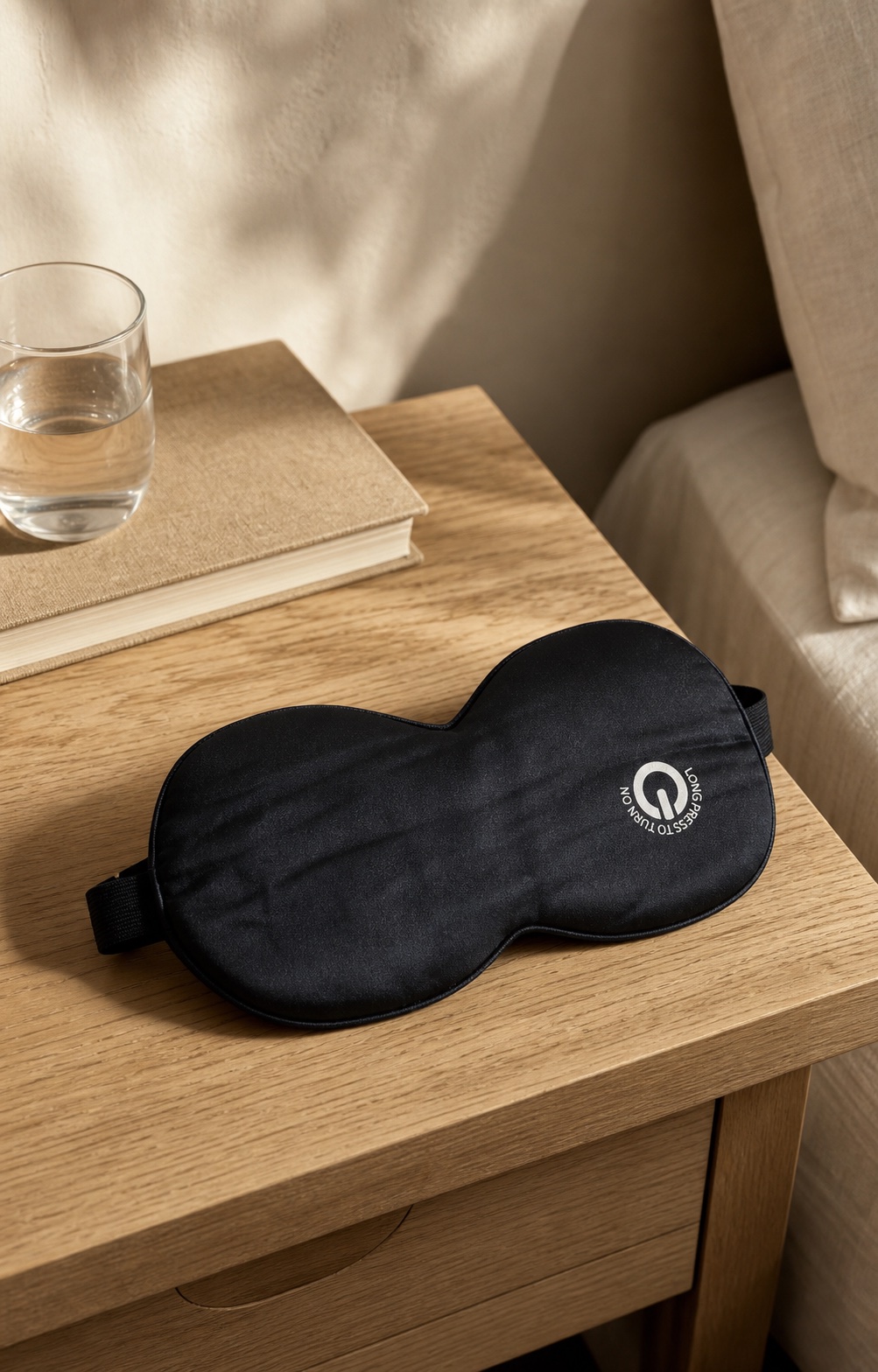
Keep liquids and damp laundry away from pumps, controllers, and charging ports. Pack cables so they are not sharply bent, and protect a pump from accidental activation. If another travel accessory combines fabric and electronics, identify its removable parts before cleaning; our guide to cleaning a silk heated eye mask explains that component-first approach.
Frequently asked questions
Are compression packing cubes the same as vacuum bags?
No. Compression cubes normally use an extra zipper or panel to reduce the cube’s depth. Vacuum bags use an airtight seal and valve to remove air. Both can create a denser bundle, but their operation and access pattern are different.
Can I use vacuum bags in a carry-on?
The bag format itself may be useful in a carry-on, but the packed luggage must meet the current size, weight, security, and battery rules for the itinerary. Consider whether security inspection or in-transit access would require you to reopen it.
Which is better for a backpack?
Cubes often create easier access in a backpack. A small compression bag can help with one bulky layer, but a hard, flat bundle may be uncomfortable or difficult to fit around the backpack’s shape.
Do packing cubes reduce wrinkles?
They can help keep folds orderly, but they do not prevent wrinkles. Garment material, folding method, pressure, and how tightly the cube is filled all matter.
Can I use both systems?
Yes. A small hybrid setup is often more resilient than forcing every item into one method. Keep frequently accessed clothing in cubes and reserve vacuum compression for suitable bulky items.
Sources and methodology
This guide compares the physical operation and daily-use tradeoffs of two packing formats. It does not claim a universal compression percentage or a change in weight. Official U.S. sources are linked for baggage and battery context; the airline and destination remain the authority for a specific trip.
- U.S. Transportation Security Administration: What Can I Bring?
- Federal Aviation Administration: PackSafe and baggage guidance
- COOVOAMAE: Do Vacuum Compression Bags Save Space?
- COOVOAMAE: Travel Vacuum Compression System product information
Travel note: baggage, security, and battery rules vary and can change. Confirm the exact device, carrier, route, fare, and destination requirements before travel.