The short answer
A useful heated eye mask should make five things easy to understand before you buy: how it creates warmth, which temperature settings are available, how long a session lasts, what touches your skin, and how the powered insert is cleaned or separated from the cover. After those basics, compare fit, light blocking, charging, portability, and the clarity of the instructions. More heat is not automatically better; controllable, even warmth and a sensible timer matter more than a dramatic maximum-temperature claim. A removable, washable cover can simplify routine care, while a cordless design may be easier at a desk or during travel. Treat a heated eye mask as a personal comfort product, not as a diagnosis or treatment. If you have persistent eye discomfort, an eye condition, reduced heat sensitivity, or questions about using warmth near your eyes, ask a qualified eye-care professional before use.
Heated eye masks look simple, but the buying decision involves several separate systems: heat, timing, fabric, fit, power, and care. Comparing those systems one by one is more reliable than choosing from a single headline claim.
Who benefits from a more detailed comparison?
A detailed comparison is especially useful if you plan to move the mask between several routines. A bedside user may prioritize simple controls and a soft, removable cover. A frequent traveler may care more about cordless operation, compact storage, and a common charging connector. Someone using a mask during short desk breaks may want a predictable timer and controls that are easy to operate without a mirror.
It also helps when comparing products that use the same broad words but mean different things. “Silk” may describe a removable cover, a blend, or only part of the contact surface. “Rechargeable” does not tell you the connector or session length. “Adjustable heat” does not reveal the temperatures. Convert every broad benefit into a specification you can verify.
What is a heated eye mask?
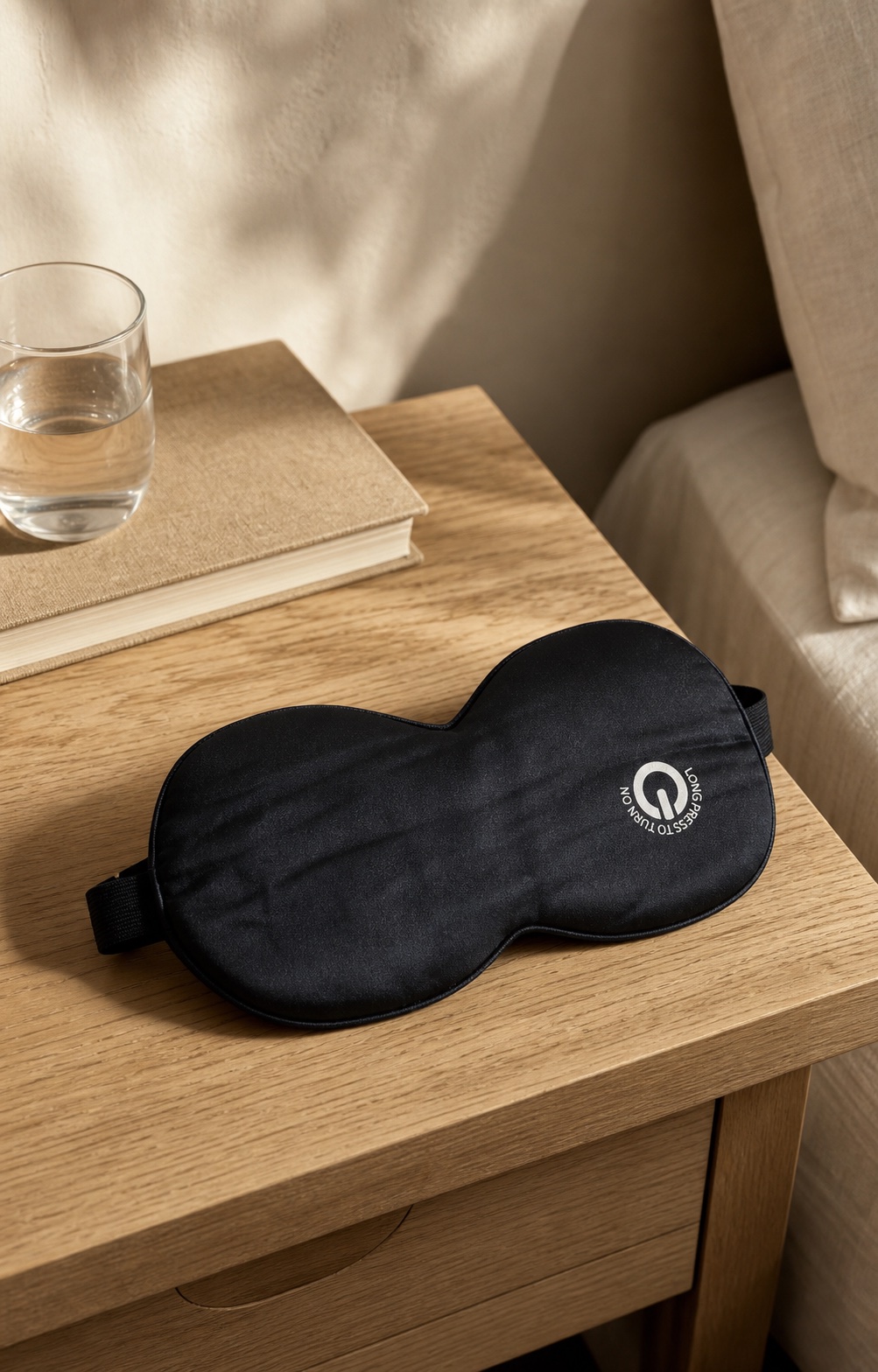
A heated eye mask is a wearable comfort mask with a warming element positioned around the eye area. Depending on the design, it may be cordless and rechargeable, USB-powered, disposable, microwave-warmed, or based on another heat source. Those formats are not interchangeable: they differ in control, portability, cleaning, and how consistently they deliver warmth.
COOVOAMAE sells consumer comfort masks for short rest, screen-break, bedside, and travel routines. They are not medical devices and are not intended to diagnose, treat, cure, or prevent a medical condition.
Which eight features should you compare?
| Feature | What to check | Why it matters |
|---|---|---|
| 1. Heat source | Rechargeable insert, cable-powered element, disposable pack, or microwaveable fill | Changes control, portability, care, and repeat use |
| 2. Temperature settings | Named levels with actual temperatures, not only “low / medium / high” | Makes products easier to compare and helps you begin conservatively |
| 3. Session timer | Automatic shutoff and stated session length | Provides a clear routine and reduces reliance on remembering to switch it off |
| 4. Cover material | Fiber, weave, softness, removability, and wash instructions | The cover is the part in direct contact with skin |
| 5. Fit and light blocking | Adjustable strap, pressure around the nose, mask shape, and cable placement | Affects comfort in different positions and environments |
| 6. Power and charging | Battery capacity if stated, connector type, charging cable, and use while charging | Determines where and how the mask can be used |
| 7. Care | Whether the powered insert can be removed and which parts may be washed | Prevents damage and makes regular cleaning more practical |
| 8. Portability | Mask, controller, cable, storage pouch, and packed size | Matters if the mask will move between home, work, and travel |
How should you compare temperature settings?
Start with transparency. A product that states actual temperatures gives you more useful information than one that uses vague labels alone. Then check how the settings are selected, whether the control is easy to find while wearing the mask, and whether the instructions explain which setting to try first.
Do not assume the highest available setting is the best everyday choice. Comfort varies by person, room temperature, cover thickness, fit, and heat sensitivity. Begin with the lowest comfortable setting, stop if the mask feels uncomfortably hot, and follow the instructions supplied with the exact model.
Why do the timer and controls matter?
A stated timer turns an open-ended use case into a defined session. It also lets you compare products more precisely: one mask may shut off after a fixed period, while another offers several durations. Check whether the timer begins automatically, whether an indicator shows the selected mode, and whether changing temperature also resets the session.
Controls should be understandable without repeated trial and error. A clear product page or manual should explain the button sequence, indicator lights, charging status, and automatic shutoff. If those basics are missing, it is harder to evaluate the product before purchase.
Which fabric and construction details are worth checking?
Look beyond the word “silk.” Useful specifications include the fiber, momme weight when relevant, whether the cover is removable, how seams sit against the face, and whether the care instructions separate the textile cover from powered parts. A removable cover does not mean the whole mask can be washed. Our component-by-component guide explains how to clean a silk heated eye mask without wetting its electronics.
Fit is equally individual. Consider strap adjustment, pressure around the nose and temples, room for different head sizes, and whether the controller or cable sits awkwardly in your preferred position. If you mainly use a mask while sitting at a desk, your priorities may differ from someone who uses it while lying down or packing it for travel.
How does the COOVOAMAE Silk Heated Eye Mask Pro compare?
Current product facts: the COOVOAMAE Silk Heated Eye Mask Pro has a removable 22-momme mulberry-silk cover, three stated warmth settings—35°C, 45°C, and 55°C—USB-C charging, a 20-minute automatic shutoff, and a stated 1500 mAh rechargeable battery.
These details describe the current COOVOAMAE product specification; they are not a promise of a medical outcome. Check the included instructions and the linked Amazon listing for the exact package, compatibility, price, and availability.
How do you build a simple comfort routine?
- Read the product instructions first. Confirm which parts are powered, which parts can be removed, and how the control works.
- Check the mask before use. Do not use a damaged cable, connector, controller, or heating insert.
- Start low. Select the lowest comfortable setting and notice how the warmth feels through the cover.
- Use the defined session. Do not cover the mask with extra bedding or add another heat source.
- Stop if uncomfortable. Remove it immediately if warmth becomes unpleasant or your skin feels irritated.
- Clean only as directed. Keep powered components dry and wash only the removable textile components identified in the instructions.
Can warm compresses help with eye discomfort?
The American Academy of Ophthalmology describes warm compresses as one measure an ophthalmologist may recommend for some people with dry-eye symptoms. That general clinical guidance does not mean every heated mask is appropriate for every person, and it does not turn a consumer mask into a treatment. The cause of eye discomfort matters.
If symptoms are persistent, painful, associated with a change in vision, or otherwise concerning, seek qualified eye care. People with an existing eye condition, recent eye procedure, reduced sensation, or uncertainty about heat use should ask their clinician before using warmth near the eyes.
Frequently asked questions
What should be on a final pre-purchase checklist?
Confirm the exact heat source, stated temperatures, timer, cover fiber, removable parts, wash instructions, strap adjustment, charging connector, battery information, included accessories, warranty or support path, and the instructions for the model. Save the product page or manual if you will need the details later.
Is a higher temperature always better?
No. Higher is not automatically more comfortable or more appropriate. Clear settings, even warmth, a usable timer, and conservative use are more meaningful than choosing by the maximum number alone.
Can I wash a rechargeable heated eye mask?
Only wash the components that the product instructions identify as washable. On a design with a removable cover, remove the powered insert first and keep all electronic parts dry.
Can I use a heated eye mask while sleeping?
Use the product only as its instructions direct. A short timed session and an automatic shutoff are useful features, but they are not a reason to ignore the stated use guidance.
What should I check for travel?
Check packed size, charging connector, cable, storage protection, and the transport rules that apply to the product’s battery. Protect the controls from accidental activation while packed.
Sources and methodology
This guide separates general comparison criteria from product-specific facts. COOVOAMAE specifications were checked against the current product page. Health context was limited to primary eye-care guidance and is presented without a treatment claim.
- American Academy of Ophthalmology: Dry Eye patient guidance
- American Academy of Ophthalmology EyeWiki: Dry Eye Syndrome
- COOVOAMAE: Silk Heated Eye Mask Pro product information
Important: This article is general product information, not medical advice. COOVOAMAE heated eye masks are consumer comfort products and are not intended to diagnose, treat, cure, or prevent any disease or condition.